 Amazon Music
 Deezer
 TuneIn + Alexa
 iHeartRadio
 PlayerFM
 Listen Notes
 Podchaser
 BoomPlay
Investor relations can make or break how investors perceive your company. It's not just about reporting numbers—it's about shaping the narrative and ensuring long-term value creation.

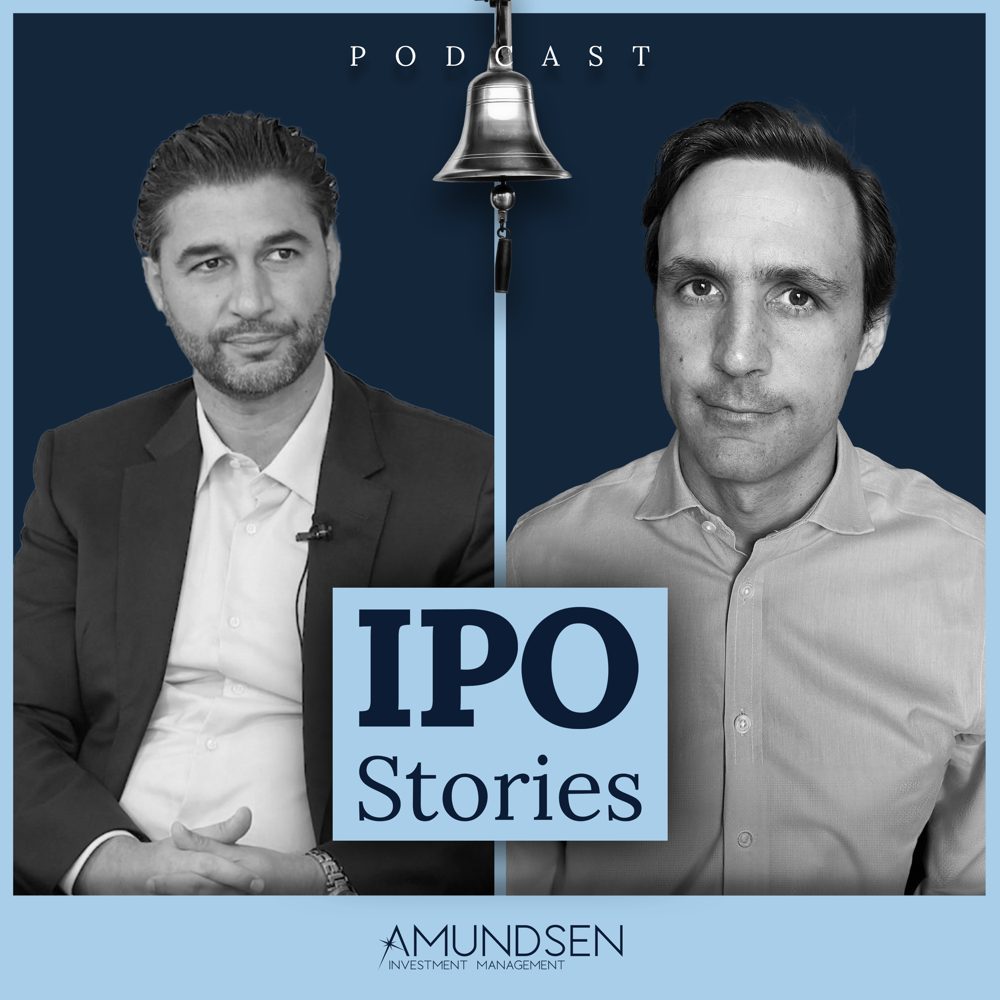
In this episode, we sit down with Marc Hammoud, VP of Investor Relations at ADPorts Group, to discuss the pivotal role investor relations plays in the success of publicly listed companies.
With over 15 years in MENA capital markets, Marc shares his expertise on how IR functions as a bridge between a company and the financial community, ensuring transparency, effective communication, and optimal shareholder engagement. He highlights the key functions of IR, from managing investor expectations to shaping company strategy, and explains why IR should be a core component of a company’s journey—ideally even before an IPO.
The discussion also covers liquidity challenges and solutions for newly listed companies. Marc explains why stock liquidity is essential for valuation and how companies can proactively enhance it by broadening shareholder diversity, engaging with the right investors, and ensuring market visibility. He shares insights into how capital markets work, how companies can leverage IR to drive long-term shareholder value, and the importance of investor education in preparing for capital-raising events or shareholder divestments.
Disclaimer: This discussion is for informational purposes only and does not constitute financial advice, investment recommendations, or solicitation to buy or sell financial instruments. The views expressed are those of the participants and do not necessarily reflect those of Amundsen Investment Management. Neither Amundsen Investment Management nor the podcast guests take responsibility for investment decisions made based on this discussion. The participants in this podcast and Amundsen IM may hold positions in the companies mentioned.
Marc Hammoud is VP of Investor Relations at AD Ports Group, a global ports and logistics company listed on the Abu Dhabi Securities Exchange, where he leads investor communications for the publicly traded entity. With over 15 years in MENA capital markets — including senior equities roles at JPMorgan Chase and Deutsche Bank — he brings deep expertise in IR strategy and shareholder engagement.


Gautier is co-founder and CIO of Amundsen Investment Management. Prior to founding Amundsen in 2021, Gautier was a Senior Portfolio Manager responsible for overseeing NBIM (the Norwegian Sovereign Wealth Fund)'s IPO investments and Equity Capital Markets activity. He started his career at BNP Paribas and as an ECM banker at Goldman Sachs before working as an investment manager in the French private equity fund Activa Capital. Gautier has a degree in Accounting & Finance from the London School of Economics and a Master in Business Administration from INSEAD.
Transcript
Auto-generated
3, 2, 1.
Gautier Rousseau: Hello and welcome to IPO Stories, a podcast that explores the paths to IPOs for companies and their stakeholders.
Through interviews with professionals who have led companies to public markets, we learn what it takes to IPO a business — the do’s and don’ts before, during, and after the listing process.
I’m Gautier, co-founder of Amundsen Investment Management, a Europe-based equity manager.
In this episode, we sit down with Marc Hammoud, Head of Investor Relations at AD Ports Group, to discuss the strategic role of investor relations.
Marc is a veteran of MENA capital markets, with over 15 years of experience as a research analyst and advisor on IPOs — covering both local MENA listings and European listings of MENA-based companies.
Since 2022, Marc has been leading the IR function at AD Ports Group, the UAE-based operator of ports and terminals that listed on the Abu Dhabi Securities Exchange (ADX) in February 2022.
With Marc, we discuss the importance of investor relations for corporate strategy, how to diversify investor relationships, how to properly manage expectations with public markets, and strategies to enhance liquidity post-IPO.
Before we start, we remind listeners that our discussion is not financial advice, nor an investment recommendation, nor a solicitation to buy or sell any financial instruments. The information is for informational purposes only. Amundsen Investment Management and the participants in this podcast may hold positions in the companies discussed.
Marc, thank you very much for joining us today. It’s a pleasure to have you. Could you start by introducing yourself?
Background and Career
Marc Hammoud: Thank you, Gautier — the pleasure is mine.
I’m Marc Hammoud, Vice President of Investor Relations at AD Ports Group. I joined the company about two and a half years ago.
My background is in investment banking — I started on the credit side, doing credit analysis and project finance, before moving to equities in 2005, covering MENA and SEMEA markets on the sell side. I spent about 15 years as an equity analyst covering various sectors, and eventually decided to leverage that experience in the corporate world.
For me, investor relations was the natural bridge — combining finance, strategy, and communication. So I made the switch two and a half years ago, and I don’t regret it. It’s been a fantastic journey.
The Role of Investor Relations
Gautier Rousseau: So you’ve worked on the sell side, as an advisor, and now as an IR officer. You’ve covered seven IPOs, correct?
Marc Hammoud: Yes, about seven IPOs and private placements during my banking career. I joined AD Ports after its listing, so I wasn’t part of the IPO process directly.
Gautier Rousseau: Great. Let’s start with the fundamentals. How do you define the role of investor relations and its key functions?
Marc Hammoud: Investor relations is a cross-functional, strategic management role that integrates finance, strategy, business development, communications, marketing, legal, and compliance.
Its goal is to ensure an effective two-way communication between a listed company and the financial community, contributing to the company’s fair valuation.
In essence, IR can make or break how investors perceive a company. Done well, it builds credibility and supports value creation.
When to Hire an IR
Gautier Rousseau: Based on that, there’s clearly value in having an IR function early on. When is the right time to bring an IR professional into a company?
Marc Hammoud: Even private companies can benefit from having an IR function.
IR isn’t just about quarterly results — it’s about benchmarking, supporting capital raising, improving reporting, and helping institutionalize the business.
If the company plans to list, it’s crucial to hire IR before the IPO — to coordinate with banks, prepare materials, and structure the communication strategy.
I always say the two most critical milestones are: the IPO itself, and the six to twelve months that follow it.
Why Companies Underestimate IR
Gautier Rousseau: Some companies hire IR only after the IPO, or on a part-time basis. Why do you think many underestimate the role?
Marc Hammoud: Because they underestimate the implications of being listed.
Many embark on the IPO journey without fully understanding the demands of the public market. They don’t realize how much time and effort investor engagement takes.
A strong IR function saves management time, enhances communication, and helps avoid costly missteps in market perception.
Feedback as a Strategic Input
Gautier Rousseau: You mentioned earlier that IR isn’t just about communication — it’s also about collecting feedback and channeling it internally. How does that work in practice?
Marc Hammoud: It’s key.
An experienced IR officer can anticipate market reactions — advising management that “this move might not be well received” or “investors will question this direction.”
Early on, management might not always listen — but over time, they see that IR feedback often aligns with how the market reacts. That’s when your credibility grows internally.
It’s a gradual process, but eventually, IR becomes part of the strategic decision-making loop.
Distinguishing Market Noise from Feedback
Gautier Rousseau: How do you differentiate genuine feedback from short-term market noise?
Marc Hammoud: By focusing on three fundamentals:
Strategy — Is it clear and coherent?
Delivery — Are we executing as promised?
Expectations — Are we managing them realistically?
If your strategy is validated by the market and you deliver on guidance, the price will reflect that over time.
Short-term volatility is inevitable — macro events, geopolitics — but you focus on what’s within your control: execution and credibility.
Reporting Structure
Gautier Rousseau: To be effective internally, to whom should IR report — the CFO, the CEO, or directly to the board?
Marc Hammoud: Ideally, to the board — because the board represents shareholders, and IR’s ultimate goal is shareholder value creation.
In reality, IR usually reports to the CFO or CEO. But it’s not just a communications role — it’s cross-functional, closer to a deputy CEO in terms of perspective.
You have to understand every part of the business, not just finance or PR.
The Ideal IR Profile
Gautier Rousseau: What’s the ideal background for an IR professional?
Marc Hammoud: Finance, without question.
You must be fluent in modeling, valuation, and financial analysis. You need to challenge analysts and fund managers when their assumptions are off, and that requires technical competence.
You’re not there to redo their job — but you should be able to spot big mistakes and understand their rationale.
This back-and-forth also helps you better understand how the market perceives your company.
Managing Consensus and Expectations
Gautier Rousseau: Some IR teams publish consensus estimates, others don’t. What’s your approach?
Marc Hammoud: I have the consensus, but I don’t share it.
I prefer analysts to form their own independent view rather than clustering around a median estimate. When everyone stays “within range,” you lose analytical depth.
What matters is understanding where the market stands, not forcing convergence.
Managing expectations is one of the most powerful ways to reduce volatility.
If you consistently deliver in line with realistic guidance, investors trust you more — and volatility drops.
The goal isn’t to “sell” a story, but to tell a factual story. Overselling and underdelivering destroys credibility.
Investor Engagement and Targeting
Gautier Rousseau: Let’s talk about investor engagement. What’s the most effective way to reach and retain investors?
Marc Hammoud: It’s about diversity and consistency.
You have your earnings cycle — results, calls, follow-up meetings — but you also need to participate in conferences, non-deal roadshows, and smaller niche events.
If you only go through the top-tier global brokers, you’ll meet the same investors repeatedly. You need to broaden the base — include smaller investors, regional funds, and retail participants.
That’s how you build a diversified and resilient shareholder base.
Building Long-Term Relationships
Gautier Rousseau: How do you balance time between existing shareholders and potential new investors?
Marc Hammoud: You need both.
Shareholders are never permanent — you always need fresh capital. But converting new investors takes time — often two years between first meeting and investment.
They want to see consistent delivery, meet management multiple times, attend site visits — and only then do they buy.
So you must continuously engage new faces, not just maintain the old ones.
Financial Disclosure and Transparency
Gautier Rousseau: Let’s talk about disclosure. How do you decide what to share publicly?
Marc Hammoud: IR should absolutely have a say in that.
At AD Ports, senior management is supportive. If I believe disclosing a new KPI or segmentation adds value, it’s discussed and validated internally.
Often, the push comes from investor feedback — if analysts can’t model a business segment, that signals a gap.
Disclosure should always aim to enhance understanding and valuation.
Balancing Transparency and Complexity
Gautier Rousseau: Is more disclosure always better?
Marc Hammoud: Not necessarily.
Too much detail creates complexity, and complexity is the enemy of valuation.
Investors need a clear, simplified story with focus on key drivers — not an overload of data.
Short-Term vs. Long-Term Guidance
Gautier Rousseau: Some analysts focus on quarterly numbers, others on long-term trends. How do you balance that?
Marc Hammoud: I always advocate for longer-term guidance.
Our assets — ports and concessions — are long-term by nature. Quarterly volatility doesn’t change the strategic trajectory.
That’s why AD Ports gives five-year guidance, not quarterly or annual targets. It helps investors focus on the bigger picture and reduces noise.
Setting the Right Guidance Framework
Gautier Rousseau: What advice would you give on setting guidance?
Marc Hammoud: It depends on your business model and maturity.
Short-term guidance requires confidence and stability. For fast-growing or transforming companies, it’s risky.
Long-term guidance gives more flexibility, especially in industries exposed to cycles — like logistics and shipping.
Be realistic: under-promise and over-deliver builds long-term trust.
Tracking Shareholders and Liquidity
Gautier Rousseau: Do you actively track who owns and trades your shares?
Marc Hammoud: Absolutely — weekly.
You must know your top 30 to 50 shareholders, who’s increasing, who’s exiting, and why.
Even if swap structures obscure some names, close relationships help you piece it together.
Understanding who owns your stock helps tailor your communication and identify conversion opportunities.
Understanding Investor Types
Gautier Rousseau: How do you view the mix between hedge funds, long-only investors, and passive money?
Marc Hammoud: It’s important to have a healthy balance.
Hedge funds bring liquidity and market activity.
Long-only investors provide stability and long-term commitment.
Passive funds come once you achieve index inclusion.
Each plays a role. Hedge funds churn more, long-onlys are sticky, and both are necessary for a functioning market.
Improving Liquidity Post-IPO
Gautier Rousseau: Liquidity is often a challenge for young listings. How can companies improve it?
Marc Hammoud: Several ways:
Encourage major shareholders to sell down gradually.
Conduct capital increases to widen the float.
Facilitate strategic exits by large pre-IPO holders.
Work toward index inclusion, which attracts institutional investors.
Liquidity is essential — without it, even great fundamentals won’t translate into fair valuation.
Educating Internal Stakeholders
Many major shareholders are reluctant to sell because they want “more value first.”
But it’s a chicken-and-egg problem — value comes after liquidity improves.
If selling 5% creates an additional 20–30% market revaluation, the overall gain far exceeds the dilution.
As IR, part of your role is to educate internal stakeholders about how capital markets actually work.
The Dream IPO
Gautier Rousseau: Last question: if you could be IR for any company’s IPO, which would it be?
Marc Hammoud: Emirates.
Gautier Rousseau: Emirates Airlines?
Marc Hammoud: Yes. It’s iconic — beyond an airline. It represents Dubai’s global image. If listed, it could redefine perceptions of UAE markets.
Even investors who avoid airlines would look at Emirates — it’s that unique.
Gautier Rousseau: Then it would be your job to make them invest!
Marc Hammoud: Exactly — you’d be selling more than an airline, you’d be selling an experience.
Gautier Rousseau: Perfect. Marc, thank you very much for your time — that was great.
Thank you for listening to IPO Stories.
In future episodes, we’ll host CEOs, CFOs, advisors, and other participants in the IPO process to learn from their experiences — like Marc Hammoud today.
If you enjoy the show, please follow us on Spotify or Apple Podcasts, share it with others, and send your questions to contact@ipostories.com.
Follow Amundsen Investment Management on LinkedIn for updates.