 Amazon Music
 Deezer
 TuneIn + Alexa
 iHeartRadio
 PlayerFM
 Listen Notes
 Podchaser
 BoomPlay
Good governance means well-run companies and well-run companies are, the kinds of companies that are well-placed to thrive over the long term.

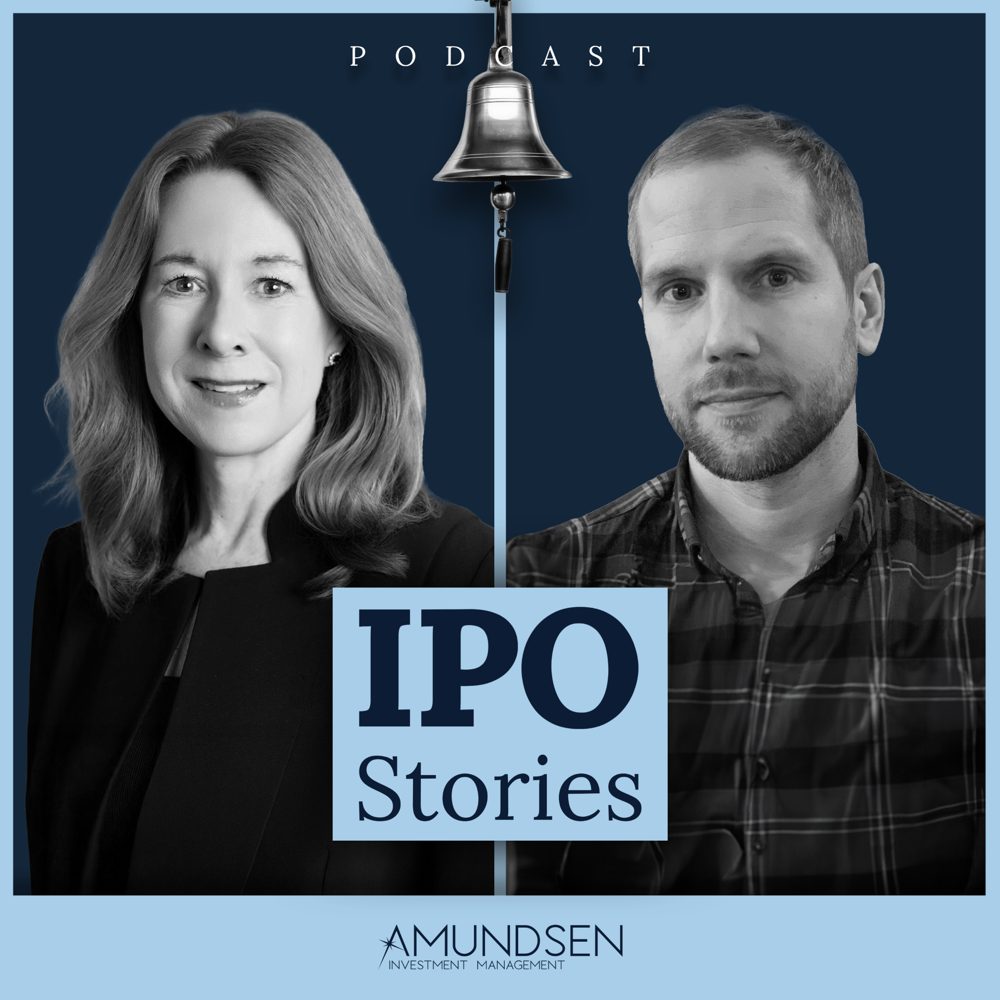
In this episode of IPO Stories, we are thrilled to welcome Caroline Escott, Head of Investment Stewardship and Co-Head of Sustainable Ownership at Railpen, one of the UK's largest pension schemes. With over £34 billion in assets under management, Railpen is a significant player in both public and private markets. Caroline leads Railpen's global investment stewardship efforts, engaging with portfolio companies on governance and strategy, and voting at annual general meetings.
Caroline shares insights into how companies should approach governance as they consider going public, drawing from Railpen's experience as an active investor in pre-IPO and IPO situations, and long-term ownership of a global portfolio of equities.
Caroline discusses the importance of good governance for long-term value creation and how Railpen's stewardship team actively engages with companies to ensure they are well-prepared for public listing. She highlights the role of governance in managing risks and opportunities, emphasizing that well-run companies are better positioned to thrive over the long term. Caroline also shares Railpen's approach to pre-IPO investments, where they work closely with companies to support their growth journey and prepare them for the heightened expectations of public markets.
If you have feedback, or there are any topics you would like us to cover on the show, please reach out at contact@ipostories.com
Disclaimer: The discussion in this episode is not financial advice, nor an investment recommendation, nor a solicitation to buy or sell any financial instruments or an offer for financial services or any other transaction. The information contained in the recording has no contractual value and is intended for informational purposes only. Amundsen Investment Management and the participants in this podcast may have holdings in the companies being discussed. Any views expressed are those of the guests only, and not of Amundsen Investment Management.
Caroline Escott is Head of Investment Stewardship and Co-Head of Sustainable Ownership at Railpen, one of the UK's largest pension schemes, where she leads global stewardship efforts across £34 billion in assets. She brings an investor's perspective on corporate governance and IPO readiness, engaging with companies on strategy and governance as they navigate the transition to public markets.


Per is co-founder and CEO of Amundsen Investment Management. Prior to founding Amundsen, Per was Global Head of Equity Enhanced Indexing at Norges Bank Investment Management (the Norwegian Sovereign Wealth Fund), where he oversaw the management of the fund's $700bn equity index portfolio, invested across 9000+ companies globally. Per is an engineer by training, with a Master of Science from Ecole Polytechnique in France and MIT in the US. Per serves as a member of AMF's consultative committee on Disclosures and Corporate Finance, FTSE Russell’s EMEA Regional Advisory Committee, and Euronext Oslo's index advisory committee.
Transcript
Auto-generated
3, 2, 1.
Per Einar Ellefsen: Hello and welcome to IPO Stories, a podcast that explores the tracks to IPOs for companies and their stakeholders.
Through interviews with professionals who have led companies to public markets, we learn about what it takes to IPO a business — the do’s and don’ts before, during, and after the listing process.
I’m Gauthier. I’m Per, co-founders of Amundsen Investment Management, a Europe-based equity manager.
Today we’re hosting Caroline Escott, Senior Investment Manager at Railpen.
Railpen manages the Railways Pension Scheme, one of the UK’s oldest and largest pension funds, with over $40 billion in assets across public and private markets.
Caroline leads Railpen’s global investment stewardship — engaging with portfolio companies on governance and strategy, and overseeing voting at AGMs.
As an active investor in both pre-IPO and IPO situations, Railpen provides a unique long-term perspective. Our discussion with Caroline focuses on how companies should think about governance when considering a public listing.
Before we start, we’d like to remind our listeners that our discussion is not financial advice, nor an investment recommendation, nor a solicitation to buy or sell any financial instruments or an offer for financial services or any other transaction.
The information contained in this recording has no contractual value and is intended for informational purposes only. Amundsen Investment Management and the participants in this podcast may hold positions in the companies being discussed.
Caroline, thank you very much for joining us today. Can we start by introducing yourself and your role at Railpen?
Caroline Escott: Thank you. Yes, I’m really happy to do so and grateful for the opportunity to speak with you. I’m a Senior Investment Manager at Railpen and head up our Investment Stewardship team.
Our focus is on creating long-term value at the companies we invest in. We’re proactive owners and use all the stewardship tools available to us.
For those unfamiliar with Railpen — we are the in-house manager of the UK Railways Pension Schemes, one of the largest in the country.
Per Einar Ellefsen: And can you tell us more about how you manage your equity portfolio?
Caroline Escott: We’re unusual in several ways. Many of our pension sections remain open, which means our £34 billion AUM has a high allocation to growth assets — including private markets and listed equities.
Since 2013, we’ve been internalising asset management, including equities and some private investments. We have a large internal team of portfolio managers, analysts, and sustainable ownership specialists.
Our listed equity strategies include a Fundamental Growth Portfolio — conviction-led, bottom-up, and long-term — and a Quant Strategies Portfolio. We also selectively use external managers where specialist expertise is needed.
Per Einar Ellefsen: And what’s your involvement in IPOs and pre-IPOs?
Caroline Escott: We’re active investors in both. We invest in IPOs when they align with our long-term strategy, and we also have a dedicated pre-IPO portfolio, mostly focused on the UK but with some international exposure.
We’ve been early investors in several of the UK’s homegrown success stories. Our philosophy is partnership — working closely with companies over the long term to help them prepare for public markets.
Per Einar Ellefsen: What’s your objective when investing pre-IPO — preparing them for public ownership or targeting valuation upside?
Caroline Escott: Both. We see strong potential for valuation growth, but also an opportunity to help innovative, high-growth companies mature responsibly toward a listing. Our capital and expertise help shape that journey.
Per Einar Ellefsen: Any examples you can share?
Caroline Escott: Oxford Nanopore Technologies is a great example. We worked closely with them pre-IPO — focusing on growth planning, governance, and preparing disclosures suitable for public investors.
Per Einar Ellefsen: Let’s talk about governance. Why is it so important for Railpen — and for public investors in general?
Caroline Escott: For us, good governance = well-run companies. And well-run companies are best placed to thrive long term.
We’re investing for people’s entire working lives — 30 to 40 years — so long-term sustainability is core. Companies with the right people, processes, and systems manage risk better and seize opportunities.
Much of the ESG outperformance evidence shows that value creation often begins with governance improvements.
Per Einar Ellefsen: Many asset managers now have stewardship teams, as do large asset owners like Norway’s NBIM. How do the two interact?
Caroline Escott: Asset owners’ stewardship teams typically focus on monitoring and holding external managers accountable — ensuring their stewardship aligns with beneficiary interests.
At Railpen, we’re somewhat unique: we’re both an asset owner and asset manager. So we not only monitor managers but also engage directly with companies, both individually and collectively with peers.
A major evolution in recent years is that large asset owners are building their own stewardship capacity. Regulatory expectations are rising, and asset owners want more control — through initiatives like pass-through voting or expression of wish mechanisms.
We’ve also worked on improving transparency — co-chairing an FCA-supported Vote Reporting Group, which published a standardised voting disclosure template to help asset managers provide better information to asset owners.
Per Einar Ellefsen: Over the past year, we’ve seen divergence between U.S. and European investors on ESG priorities. How is this playing out?
Caroline Escott: It’s true — political context differs. But the financial materiality case for ESG remains universal.
Where there’s clear evidence of material impact — environmental, social, or governance — responsible investors continue to engage, regardless of politics.
The divergence is mostly about public positioning, not underlying activity. U.S. asset owners still act on ESG but may communicate differently in today’s environment.
Per Einar Ellefsen: When engagement fails, what tools do you have? Voting is one, but what else?
Caroline Escott: Voting gets attention because it’s visible, but engagement is broader.
We ask public questions at AGMs, make pre-declarations of voting intentions, and issue public statements to signal support or concern.
For instance, we pre-declared our support for Mears Group, which pioneered a workforce director model. We wanted to highlight good practice and signal to peers that this was worth supporting.
We also use policy advocacy for systemic issues like climate or biodiversity, where collective solutions are needed.
And yes — as active investors, we can “vote with our feet.” If a company poses unmanageable risks or refuses to improve, we can divest.
Per Einar Ellefsen: Do you have many exclusions?
Caroline Escott: We maintain three main exclusion policies:
Controversial weapons (aligned with international treaties),
Climate exclusions (e.g. oil sands, where transition is infeasible),
Governance & conduct exclusions, where red flags include poor audit oversight, dual-class structures, or weak boards.
Interestingly, the exclusions process is also a powerful engagement tool — companies often improve to avoid exclusion.
Per Einar Ellefsen: When a company goes public, how must its governance evolve?
Caroline Escott: Two big shifts:
Shareholder base — suddenly you face a wider, more diverse set of investors.
Disclosure expectations — public companies face higher standards of transparency.
We’re pragmatic with newly listed firms but expect progressive improvement in disclosure over time.
Per Einar Ellefsen: Right — private boards deal with a few concentrated investors; public boards face many smaller shareholders.
Caroline Escott: Exactly. And one misconception we address with pre-IPO firms is that public investors are short-term or box-ticking.
In reality, stewardship quality is improving. Regulatory and client pressures are driving more meaningful engagement from institutional investors.
Per Einar Ellefsen: You co-founded the Investor Coalition for Equal Votes (ICEV). Tell us about it.
Caroline Escott: Yes. ICEV, co-founded with the Council of Institutional Investors, started with $1.3 trillion AUM and now represents over $4.5 trillion globally.
We believe in capitalism’s basic principle: ownership and control should be proportional. Dual-class share structures — where insiders have 10, 20, or even 100 times the voting rights — violate that.
Research shows that any benefits of such structures fade within a few years. That’s why we advocate time-based sunset clauses (seven years or less).
We also engage pre-IPO companies and advisors, encouraging them to design sustainable share structures before listing.
Per Einar Ellefsen: Founder-led firms often justify dual-class early on — but over time, minority voices matter.
If I’m a CEO considering an IPO, how should I structure governance for success?
Caroline Escott: Focus on people and systems.
Appoint an independent chair.
Build a diverse, experienced board — especially directors with listed-company experience.
Conduct board evaluations to identify skill gaps.
Encourage senior executives to serve as non-executive directors elsewhere — it broadens perspective.
Avoid under-boarded boards. Diversity of thought and background drives better decision-making.
Also, ensure a robust internal audit function and a share structure that keeps management accountable to all shareholders.
Per Einar Ellefsen: Should senior management and directors be shareholders?
Caroline Escott: Yes — having skin in the game aligns incentives. But remuneration must encourage long-term value creation, not short-term gains.
Per Einar Ellefsen: What’s the long-term link between governance and company performance?
Caroline Escott: Strong governance means better transparency, trust, and cost of capital. Companies with credible governance attract investors, earn higher credit ratings, and face lower risk premia.
Engaging with shareholders isn’t a burden — it’s a strength. Good governance enables discipline, dialogue, and long-term value creation.
Per Einar Ellefsen: Absolutely. Poor governance raises the cost of capital — or shuts off access entirely.
We’ve also seen competition between exchanges, some loosening standards to attract listings. What’s your view?
Caroline Escott: It does feel like a race to the bottom in corporate governance.
ICEV began focusing on the U.S. and UK, but we’re now engaging globally — Europe, Japan, and Australia — where similar debates are emerging.
Our message is simple: capital markets must appeal to both issuers and investors. Lowering standards may attract a few listings, but it repels institutional capital.
Per Einar Ellefsen: Exactly. The focus should be on attracting investors, not just companies.
As an asset owner, how do you balance the desire for more listed companies with maintaining high standards?
Caroline Escott: The goal isn’t just more listings — it’s high-quality ones. We want a steady stream of well-governed, transparent, long-term businesses.
At Railpen, we also invest in private markets, but we believe the answer is not to lower public standards, but to raise private standards — narrowing the governance gap between public and private markets.
That’s the sustainable way to strengthen capital markets overall.
Per Einar Ellefsen: If I’m a private CEO considering going public, when should I start preparing governance?
Caroline Escott: Ideally, always — but at least five years out.
Build governance progressively: board structure, audit, disclosure, sustainability. Don’t treat ESG as an add-on; embed it in your business model early.
Per Einar Ellefsen: How can management understand investor expectations around governance and sustainability?
Caroline Escott: Several ways:
Engage directly with institutional investors — many are open to conversations.
Use forums like ICGN, Investor Forum, or CII to hear collective views.
Consult financial advisors, who should understand stewardship expectations.
And read stewardship reports — they’re full of examples of how investors engage on material ESG issues.
Also, don’t just talk to asset managers — reach out to asset owners too. They are the ultimate clients and are becoming increasingly influential.
Per Einar Ellefsen: Excellent. Thank you very much, Caroline — practical advice and valuable policy insight.
Caroline Escott: Thank you. It’s been a pleasure.
Per Einar Ellefsen: Thank you for listening to IPO Stories.
In future episodes, we’ll host CEOs, CFOs, advisors, investors, and other participants in the IPO process to learn from their experience — like Caroline Escott today.
If you like the show, please follow us on Spotify or Apple Podcasts, and share it with people around you.
If you have questions about the IPO process you’d like us to address with future guests, please contact us at contact@ipostories.com and follow Amundsen Investment Management on LinkedIn.