 Amazon Music
 Deezer
 TuneIn + Alexa
 iHeartRadio
 PlayerFM
 Listen Notes
 Podchaser
 BoomPlay
So the [US] market's pretty crowded […] Over the 10 years that I spent at Criteo, there were more and more companies going public. […] So that makes it very noisy, very difficult to get your voice heard, especially for SMids

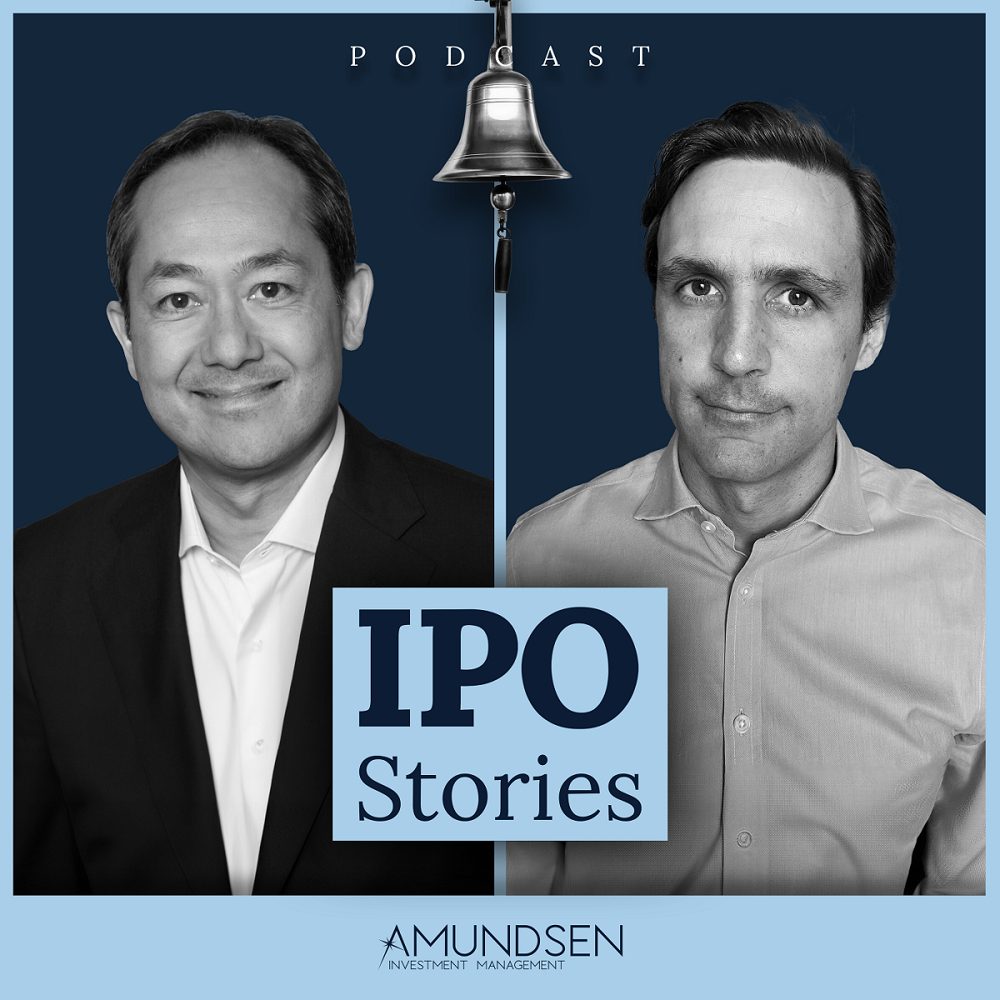
Criteo, a French adtech company, listed on Nasdaq in 2013. Edouard Lassalle joined in 2012 to prepare the company for the IPO, and later served as head of Investor Relations for the company until 2022.
One of the topics that comes up at an early stage during IPO preparation is the choice of listing location. In earlier episodes, we have heard from tech executives at Wise, DeliveryHero, OVHCloud and Exclusive Networks why they decided to list in Europe.
Today, we look back at the 2013 US IPO of Criteo. Criteo was founded in 2005 and backed by leading VC investors such as Elaia, Index Ventures and Bessemer, with a global customer base. In 2013, the company was listed on Nasdaq, raising $280mn to fund its growth.
Edouard Lassalle joined the company in 2012 to prepare the company for the IPO, and later served as head of Investor Relations for the company until 2022. Edouard shares with us his list of pros and cons of a US vs European listing for a European tech company, as well as considerations around the different characteristics of US and European markets, and the impact is has on the company.
If you have feedback, or there are any topics you would like us to cover on the show, please reach out at contact@ipostories.com
Disclaimer: this discussion is not financial advice, nor an investment recommendation, nor a solicitation to buy or sell any financial instruments, or an offer for financial services or any other transaction. The information contained in the recording have no contractual value and are destined for an informational purpose only. Amundsen Investment Management and the participants on this podcast may have holdings in the companies being discussed.
Edouard Lassalle is the VP and Head of Investor & Analyst Relations at Criteo (NASDAQ: CRTO), the global ad tech company that went public on the Nasdaq in October 2013, where he served as the investor relations point of contact for the IPO. He has spent years managing the company's relationships with investors and analysts across its life as a public company.


Per is co-founder and CEO of Amundsen Investment Management. Prior to founding Amundsen, Per was Global Head of Equity Enhanced Indexing at Norges Bank Investment Management (the Norwegian Sovereign Wealth Fund), where he oversaw the management of the fund's $700bn equity index portfolio, invested across 9000+ companies globally. Per is an engineer by training, with a Master of Science from Ecole Polytechnique in France and MIT in the US. Per serves as a member of AMF's consultative committee on Disclosures and Corporate Finance, FTSE Russell’s EMEA Regional Advisory Committee, and Euronext Oslo's index advisory committee.
Transcript
Auto-generated
3, 2, 1.
Per Einar Ellefsen: Hello and welcome to IPO Stories, a podcast that explores the paths to IPOs for companies and their stakeholders. Through interviews with professionals who have led companies to public markets, we learn what it takes to IPO a business—the do’s and don’ts before, during, and after the listing process. I’m Per, co-founder of Amundsen Investment Management, a Europe-based equity manager. One of the topics that often comes up during IPO preparation is the choice of listing location.
In earlier episodes we’ve heard from tech executives at Wise, Delivery Hero, OVHcloud, and Exclusive Networks about why they decided to list in Europe. Today we discuss the 2013 U.S. IPO of Criteo with Edouard Lassalle. Criteo is a French ad tech company founded in 2005 and backed by leading VC investors such as Elaia, Index Ventures, and Bessemer, with a global customer base. In 2013, the company was listed on NASDAQ, raising $280 million to fund its growth.
Edouard Lassalle joined the company in 2012 to prepare for the IPO and later served as Head of Investor Relations until 2022. He’s now SVP Corporate Finance at Contentsquare, a global leader in digital experience analytics. Before we start, we remind listeners that our discussion is not financial advice, nor an investment recommendation, nor a solicitation to buy or sell any financial instruments, or an offer for financial services or any other transaction. The information contained in this recording has no contractual value and is intended for informational purposes only.
Amundsen Investment Management and the participants in this podcast may have holdings in the companies being discussed. Edouard, thank you very much for joining us today. Maybe you can introduce yourself a bit and your story at Criteo.
Edouard Lassalle: With pleasure. I’m Edouard Lassalle, and I’m speaking to you today about the IPO of Criteo, which happened ten years ago. For those who don’t know it, Criteo is a French company founded in 2005. It’s a technology company active in what we call advertising technology, which helps anyone selling online do so more effectively—by providing a suite of services around digital advertising and improving consumer conversion on behalf of our B2B clients.
I joined Criteo in 2012, about 18 months before it went public in the U.S., with the mandate to help prepare for an IPO—specifically a U.S. IPO—and I ran that program for about a year before moving into the transactional process. That’s Criteo in a nutshell. Happy to go into detail. As for my background, I was very much an investor relations profile: I spent most of my career in IR—first at Vivendi Universal, when it was still listed in the U.S., and later at Business Objects, the first ever European company listed on NASDAQ. Before joining Criteo, I was CFO of a mid-sized digital gaming company—so, quite far from public markets.
Per Einar Ellefsen: Looking back at 2012–2013, when the IPO project started—what was the rationale? Was it pressure from VC investors seeking liquidity?
Edouard Lassalle: We had Eurazeo, Index Ventures, Bessemer, and later SoftBank. But I’d say it was less about liquidity and more about accelerating growth. We were already growing quickly—our first public quarterly announcement was +75% year-over-year revenue growth—but we wanted to accelerate that trajectory through further investment. So yes, raising capital was a key motivation, but we were also a capital-efficient business.
Prior to the IPO, Criteo had raised only €47 million, while running at a revenue rate north of €200 million. The IPO raised about $288 million. So yes, some early investors sought liquidity, but the top reason was growth—especially in the U.S., already our largest market.
Per Einar Ellefsen: So you ended up raising $288 million in primary proceeds.
Edouard Lassalle: Correct—entirely primary.
Per Einar Ellefsen: Was the U.S. listing driven mainly by the business need for visibility among potential U.S. clients?
Edouard Lassalle: That was certainly a big part of it, though not the only one. Our CEO Jean-Baptiste Rudelle had an amazing ability to attract top talent. We’d already hired strong U.S. leadership—Greg Coleman as President of the U.S. subsidiary, for instance—and we wanted to raise Criteo’s brand profile in the U.S. market. Listing there helped elevate our visibility and credibility with both clients and recruits.
So the rationale was a mix of brand equity, U.S. market relevance, and tapping into the unique depth of the American investor base.
Per Einar Ellefsen: When you joined, was the U.S. listing already decided?
Edouard Lassalle: Pretty much, yes. I joined mid-2012, and there was already gentle pressure from the board to go public. I did a pros-and-cons analysis—France vs. U.S.—to challenge the assumption, but the decision to go to the U.S. was effectively made from the start.
Per Einar Ellefsen: What were your pros and cons at the time?
Edouard Lassalle: The main pro for Europe was scarcity—there were very few comparable high-growth, profitable (or near-profitable) tech companies. We could have stood out as one of the few true growth names. It’s also cheaper to list in Europe.
Per Einar Ellefsen: You would have been one of the few “pure tech growth” plays in Europe.
Edouard Lassalle: Exactly. But the pros for the U.S. were stronger. Beyond visibility and liquidity, the ecosystem—investors, analysts, and bankers familiar with ad tech—was far more developed. That mattered a lot.
At the time, there were peers like Millennial Media (2012 IPO) and Rocket Fuel (2013), similar in category and scale. And of course, the broader context—Yahoo, Google, AOL, Amazon—meant investors already understood our space.
That maturity of the ecosystem was a big argument for a U.S. listing: sell-side coverage, specialized buy-side analysts, and dedicated tech funds already existed.
Per Einar Ellefsen: So what were the other key advantages?
Edouard Lassalle: Mainly market depth and liquidity. The U.S. remains the deepest equity market globally, with structured investor segments for every capitalization—from large cap to SMID-cap. Even for a ~$2B valuation company like us, the U.S. had active coverage and liquidity—unlike Europe, where mid-caps can struggle for attention.
Plus, being NASDAQ-listed boosted our employer brand and credibility with clients—particularly in the U.S.—a clear signal of strength and transparency.
Per Einar Ellefsen: But in U.S. terms, $2B is small-cap territory, whereas in Europe you’d be mid-cap. Wasn’t that a challenge?
Edouard Lassalle: True—but in the U.S., there’s a well-defined SMID category (small/mid). There are dedicated investors, analysts, and funds for it. So we fit right in. The question from larger funds like BlackRock was about liquidity, not relevance. We addressed that by operating as a domestic filer, reporting in USD and under U.S. GAAP, filing 10-Ks and 10-Qs—essentially behaving like a U.S. company, which gave investors confidence.
Per Einar Ellefsen: We recently had the CFO of Wise mention that European half-year reporting was less burdensome than U.S. quarterly guidance. Did you find quarterly reporting a challenge?
Edouard Lassalle: Absolutely—it’s one of the cons. U.S. investors are more short-term focused, and smaller companies are expected to guide quarterly. It creates volatility, because small KPI changes can trigger overreactions. But how you guide—what metrics you disclose and how you frame your narrative—can help balance that.
Overall, the main cons were volatility and compliance cost. The U.S. market can be noisy and sentiment-driven, especially in tech. It’s very storytelling-based, sometimes less valuation-grounded than Europe. That can amplify both upside and downside swings.
Then there’s compliance cost—SOX readiness, PCAOB audits, and related services. For a company of Criteo’s size, we spent $3–5 million annually, roughly double what it would have cost in Europe.
Per Einar Ellefsen: How did investor targeting work for the IPO?
Edouard Lassalle: We built a dual-track syndicate:
J.P. Morgan (lead-left) and Deutsche Bank focused on top-tier institutional investors.
Jefferies brought access to smaller, SMID-focused investors.
Four co-managers (including Pacific Crest) widened our reach among tech specialists.
It worked very well—the IPO book was 13x oversubscribed, with a healthy mix of Fidelity, T. Rowe Price, and Wellington alongside smaller funds.
Per Einar Ellefsen: The initial range was $23–26, then you raised it to $27–29, and priced at $31—about +26% above mid-range.
Edouard Lassalle: Yes, and we upsized the offering too. It was extremely well executed—J.P. Morgan’s team, especially Mike Millman, did a stellar job.
We deliberately made it a primary-only IPO—no secondary shares—to align incentives. We planned for a follow-on offering later for VCs. The pricing strategy was conservative to ensure strong aftermarket performance—which it delivered.
The flexibility to revise the price range in the U.S. (versus Europe) was a real advantage—it let us follow market demand dynamically.
Per Einar Ellefsen: Post-IPO, how did relations with VC investors evolve?
Edouard Lassalle: Mixed. Some sold quickly after lock-up expiration—especially U.S.-based ones—creating short-term volatility. Others stayed longer. The follow-on helped organize exits, but overall, liquidity management was a learning experience.
Per Einar Ellefsen: How did you build your shareholder base post-listing?
Edouard Lassalle: Through active IR. The CFO and I spent two years on the road—attending nearly every broker conference across our seven IPO banks, meeting hundreds of institutions. We targeted both IPO investors and new U.S. tech specialists. Some, like Fidelity, quickly grew to 10% positions. Constant engagement was key.
Per Einar Ellefsen: And between long-only managers like Fidelity and tech hedge funds?
Edouard Lassalle: Both mattered. The relationship style differed—Fidelity was more structured, quarterly, fundamental. Tech specialists wanted frequent, detailed discussions. We built trust with both over time.
We pitched ourselves not as “ad tech” but as a performance partner—an outsourced cost of sales for e-commerce. That framing—ROI-driven, scalable, machine-learning based—resonated strongly with investors who understood the ecosystem.
Per Einar Ellefsen: With hindsight, would you make the same choice of listing in the U.S.?
Edouard Lassalle: Yes, absolutely. Given the ecosystem maturity, investor familiarity, and lack of suitable European peers at the time, it was the right call. Our European “comparables” were Publicis, Vivendi, or Capgemini—not really relevant benchmarks.
Per Einar Ellefsen: Has the European tech investor ecosystem evolved since?
Edouard Lassalle: It has, especially in Paris, Berlin, and London. But on the public-market side, progress has been slower—few new tech IPOs, limited liquidity. If Criteo IPO’d today, it would still likely choose the U.S., though for somewhat different reasons.
Per Einar Ellefsen: Any fun memories from the roadshow?
Edouard Lassalle: Plenty! Two weeks crisscrossing the U.S. in a private jet with a French team was unforgettable. But the highlight was listing day—having the ten earliest Criteo employees present, their pride, their emotion. Seeing the company on French TV that day—my mother watching—was something I’ll never forget.
Per Einar Ellefsen: Thank you very much, Edouard, for joining us.
Edouard Lassalle: Thank you, Per—thanks for having me.
Per Einar Ellefsen: Thank you for listening to IPO Stories. In future episodes, we’ll host CEOs, CFOs, advisors, and other participants in the IPO process to learn from their experience—like from Edouard today. If you like the show, please follow us on Spotify or Apple Podcasts and share it with others. If you have questions about the IPO process you’d like us to discuss with future guests, please get in touch at contact@ipostories.com, and follow our LinkedIn account: Amundsen Investment Management S.A.